Root Canal Treatment Guide
What is root canal treatment?
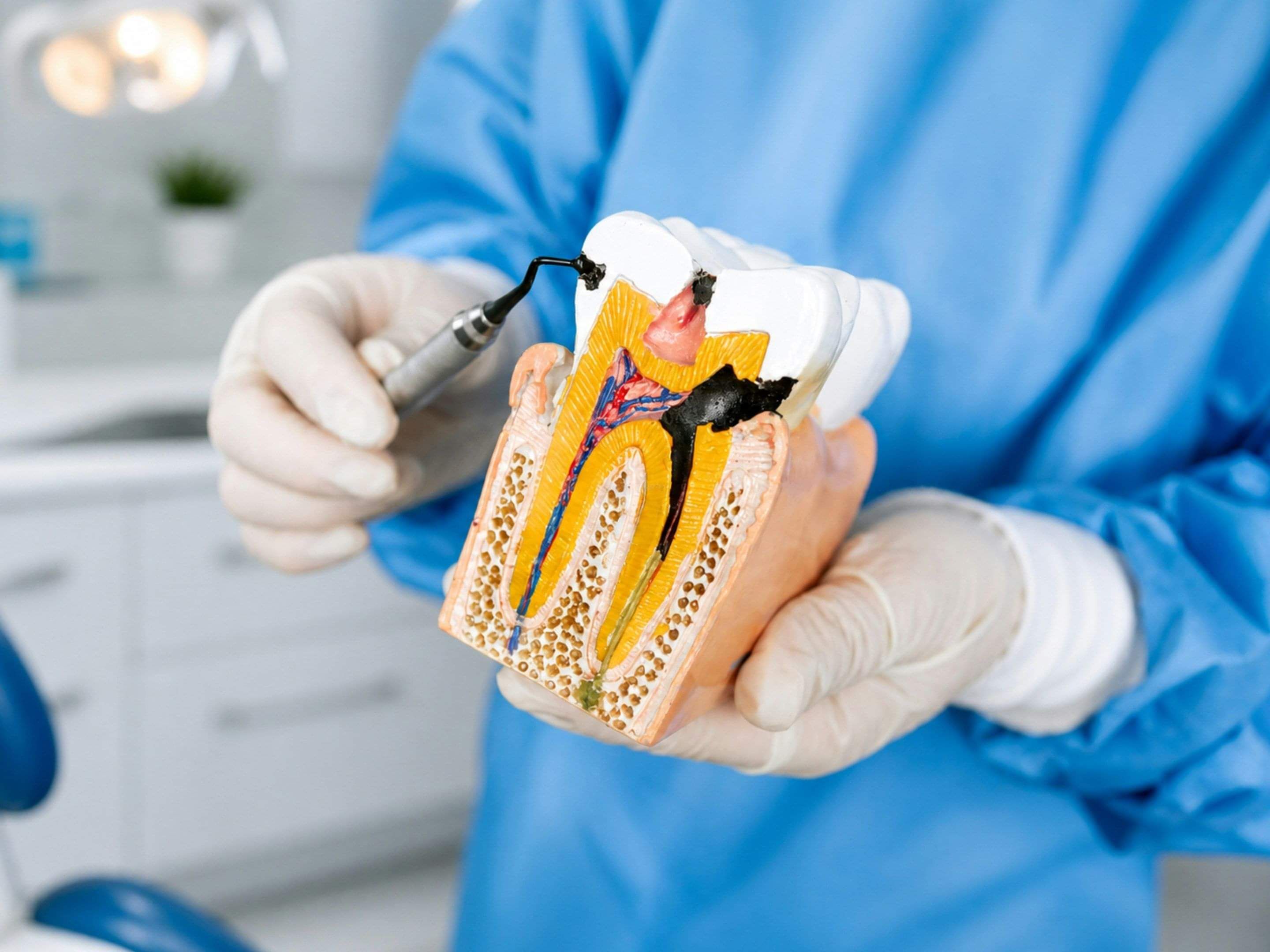
Root canal treatment (also known as endodontic treatment) is used to treat disease or infection affecting the pulp, or "nerve", inside a tooth.
The aim of treatment is to remove infection, relieve pain and save the natural tooth wherever possible.
When a tooth can be successfully treated and restored, it can often continue to function normally for many years.
Why does a tooth need root canal treatment?
The pulp inside a tooth can become inflamed or infected for a number of reasons, including:
Deep dental decay
Physical injury or trauma
Cracks or fractures in the tooth
Long-term grinding or clenching
The breakdown of older fillings or crowns
Occasionally, the pulp can become damaged many years after dental treatment has been completed.
Early signs and symptoms
Early symptoms may include:
Sensitivity to hot or cold foods and drinks
Mild toothache or discomfort
Tenderness when biting
In some cases, inflammation can be reversed if the cause is identified and treated early.
When infection develops
Once the pulp becomes infected or dies, an abscess may form.
You may experience:
Increasing toothache
Pain when biting
Swelling of the gum or face
A tooth that feels raised or tender
A bad taste in the mouth or discharge from the gum
At this stage, treatment options are generally limited to root canal treatment or extraction.
What happens during root canal treatment?
Root canal treatment is completed under local anaesthetic and is usually carried out over one or more appointments.
X-rays and assessment
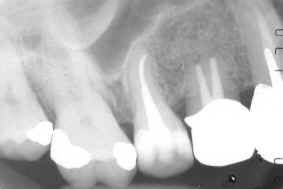
X-rays are taken throughout treatment to assess the tooth and determine the length and shape of the root canals. Electronic measuring devices may also be used to assist with treatment.
Accessing the tooth
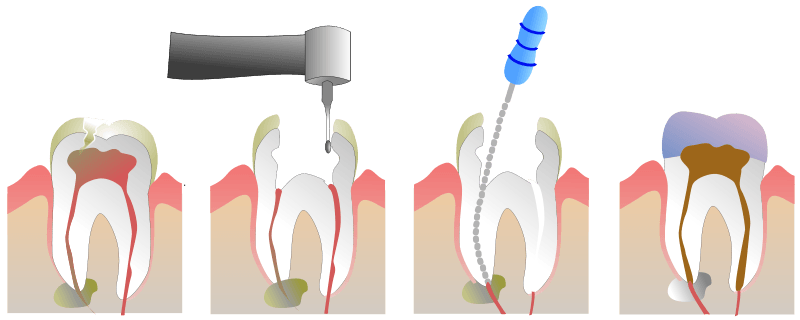
The tooth is carefully prepared and an opening is made to allow access to the pulp chamber and root canals.
Cleaning the canals
Special instruments are used to clean, shape and disinfect the root canals. During this process, the canals are regularly irrigated with disinfecting solutions to remove bacteria and infected tissue.
Depending on the condition of the tooth, medication may be placed inside the canals between appointments to allow infection and inflammation to settle.
Sealing the canals
Once the canals are clean and free from infection, they are sealed using specialised root filling materials designed to prevent reinfection.
Restoring the tooth
The final restoration is an important part of successful root canal treatment. A permanent filling or dental crown may be recommended to restore the tooth and protect it from future damage.
Will I need a crown?
Root-treated teeth can become more susceptible to cracking or splitting over time. For this reason, many teeth are restored with crowns following treatment.
Your dentist will discuss whether a crown is recommended for your particular tooth.
Risks and complications
Root canal treatment has a high success rate, however, like all dental procedures, there are some risks and limitations.
Occasionally:
Infection may persist or return.
Further treatment may be required.
Previously treated teeth can be more difficult to manage.
Root canals may be extremely fine or curved.
Instruments used during treatment can occasionally separate inside the canal.
Your dentist will discuss any relevant risks with you before treatment begins.
What happens if I don't have treatment?
An infected tooth will not heal on its own.
Without treatment, the infection is likely to worsen and may eventually result in the loss of the tooth. In some cases, dental infections can become serious and may require urgent treatment.
Are there any alternatives?
The only alternative to root canal treatment is extraction of the affected tooth.
Where possible, we aim to preserve natural teeth, as they are usually the best option for maintaining long-term oral health and function.
Looking for more information?
Visit our Dental Health Hub for practical advice, information on common dental concerns and tips for keeping your smile healthy.
Book an appointment
If you're considering tooth whitening, we'd be happy to discuss the options available and help you decide whether treatment is right for you.

